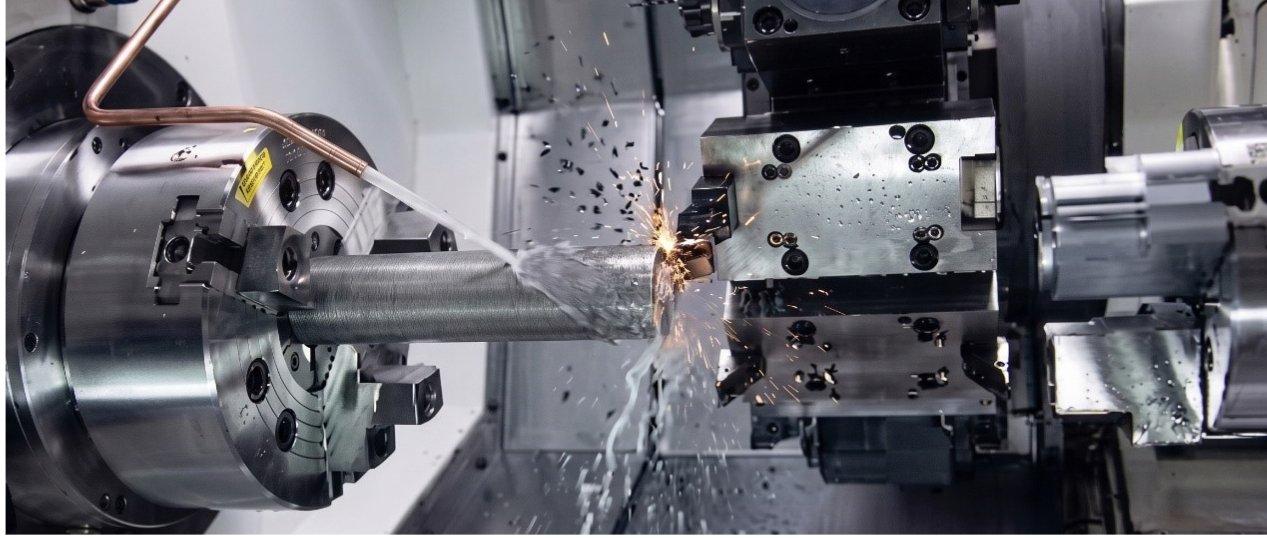
In the aerospace, energy, and defense industries, Inconel 718 is a top choice for critical parts due to its excellent high-temperature strength and corrosion resistance. However, on the CNC lathe shop floor, it is a well-known "difficult-to-cut material." Machining Inconel 718 is a severe test of tool life, machine rigidity, and machining strategy.
1. Understanding the Machining Challenges of Inconel 718
To stably produce aerospace-grade parts, you must first understand the physical properties of Inconel 718 that affect cutting:
- Extremely Low Thermal Conductivity: Inconel 718 dissipates heat very poorly. About 80% of the cutting heat concentrates at the tool tip instead of flowing away with the chips. This causes the cutting edge temperature to quickly rise above 800°C, softening the insert and drastically reducing tool life.
- Severe Work Hardening: The material surface hardens quickly after it is deformed by cutting forces. If the depth of cut (DOC) is too shallow, the tool tip will rub continuously against the hardened layer. This creates extreme heat and resistance, leading to chipped cutting edges.
- Strong Adhesiveness: Under high cutting heat, the material easily sticks to the insert, forming a built-up edge (BUE). This changes the tool geometry and ruins the workpiece surface finish.
2. Practical Turning Parameters and Fanuc Programming Strategy
For this type of heat-resistant alloy, the machining logic should be "low speed, stable feed, and plenty of coolant."
- The Crucial Role of Constant Surface Speed (G96) Using G96 is a basic requirement for machining Inconel 718. Because the material is extremely sensitive to heat, you must maintain a constant cutting speed (Vc) to protect tool life. At the same time, you must use G50 to limit the maximum spindle speed (RPM). This prevents thermal damage caused by excessively high RPM as the tool moves toward the centerline.
- Recommended Cutting Parameters (For PVD Coated Carbide Tools)
| Machining Stage |
Cutting Speed Vc (m/min) | Feed f (mm/rev) | Depth of Cut ap (mm) | Practical Advice |
| Rough Turning |
25~45 | 0.15~0.25 | 1.5~3.0 | Keep DOC stable; avoid repeated light cuts. |
| Finish Turning | 40~65 | 0.05~0.12 | 0.2~0.5 | The feed amount must be enough to break through the hardened layer from the previous pass. |
- Programming Tip: Strictly avoid any "dwell" time in the cutting path. When the tool stops feeding but the spindle keeps rotating, it causes severe localized work hardening. This creates a high risk of edge chipping on the next cutting pass.
3. Hard Requirements for Machine Rigidity
When machining Inconel 718, the machine is not just holding the tool; it is the main defense against massive cutting forces.
- Low-Speed, High-Torque Output: Because the cutting speed is set very low, the spindle mostly runs in the low RPM range. Focus CNC lathes deliver strong torque output even at low RPMs, preventing chatter marks caused by spindle speed fluctuations during machining.
- Bed Damping and High Rigidity: Cutting forces for Inconel 718 are much higher than for standard steel, easily triggering high-frequency vibrations. A one-piece, high-rigidity machine bed effectively absorbs micro-vibrations. This is critical for maintaining part dimension accuracy and protecting tools.
- High-Pressure Coolant System: In Inconel machining, the coolant system is just as important as the cutting tool. We recommend using a high-pressure coolant system (70 BAR or higher). Precisely blasting coolant into the cutting zone forces the temperature down, breaks the chips, and flushes them away.
- High Clamping Force Turret: The turret must have enough positioning rigidity under load. This prevents micro-displacement during heavy-duty cutting and ensures long-term repeatability.
4. Practical Machining Advice
- Depth of Cut Strategy: Use a larger DOC during roughing. Try to remove most of the excess material in one pass to reduce the number of times the tool contacts the work-hardened surface.
- Tool Selection: Prioritize dedicated inserts with a positive rake angle and a very sharp cutting edge. This lowers cutting resistance and reduces heat generation.
- Thermal Balance Management: Monitor the machine's thermal displacement closely during the early stages of mass production. Ensure the machine's geometric accuracy still meets aerospace tolerance requirements after long periods of heavy cutting.
Conclusion
The key to mastering Inconel 718 is precise control over "heat" and "force." With the excellent rigidity of Focus CNC lathes, precise Fanuc constant surface speed commands, and proper high-pressure coolant, you can overcome the technical barriers of difficult-to-cut materials and achieve high-quality, high-efficiency automated production.
If you are evaluating a CNC lathe for Inconel 718 or other demanding machining applications, contact Focus CNC to discuss your workpiece dimensions, material, machining process, and production requirements and identify a suitable machine configuration.